

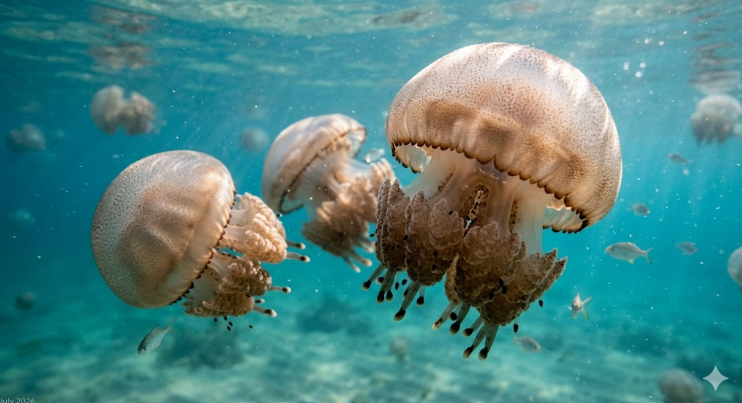
Have you ever seen something in the ocean that looks like a floating soccer ball? If you have, you might have spotted a cannonball jellyfish. These sea creatures are also called “cabbage head jellyfish” because of their round, firm shape. They are very common along the coasts of North America, especially in the warm waters of the Atlantic and the Gulf of Mexico. Unlike some other jellyfish that look like long, flowing ghosts, these guys are tough and chunky.
I remember the first time I saw a cannonball jellyfish washed up on a beach in South Carolina. It didn’t look like a typical “blob.” It felt solid, almost like a piece of rubber. These jellyfish are fascinating because they are not just drifting aimlessly; they are active swimmers. They use their round bells to pump water and move through the waves. They are a vital part of the ocean’s balance and are much friendlier than you might think!
What Does a Cannonball Jellyfish Look Like?
The cannonball jellyfish has a very distinct look that makes it easy to identify. Its main body, called the “bell,” is shaped like a dome or a bowl. Most of them are white or creamy yellow with a pretty brownish-purple band around the bottom edge. They don’t have the long, stinging tentacles that you see on a Man o’ War. Instead, they have sixteen short, thick arms tucked underneath them.
These arms help them swim and catch tiny bits of food. A fully grown cannonball jellyfish is usually about 7 to 10 inches wide. They feel much heavier than they look because their bodies are packed with a firm, jelly-like material. When you see a group of them together, it looks like a bunch of underwater helmets bobbing in the current. Their simple design is perfect for life in the surf zone.
Is the Cannonball Jellyfish Dangerous to Humans?
One of the first things people ask is: “Will it hurt me?” The good news is that the cannonball jellyfish is mostly harmless to humans. While they do have toxins to catch their prey, their sting is very weak. If you accidentally touch one while swimming, you might feel a tiny tingle or nothing at all. They are considered one of the safest jellyfish to be around in the water.
However, even though the cannonball jellyfish isn’t dangerous, you should still be careful. The mucus they produce can sometimes irritate your eyes if you touch them and then rub your face. I always tell my friends to admire them with their eyes first. If one washes up on the sand, it is best to leave it alone. Even a dead jellyfish can sometimes cause a small skin itch if you have very sensitive skin.
Where Can You Find These Jellyfish?
You can find the cannonball jellyfish in many places around the world. They love warm coastal waters. You will see them most often along the United States East Coast, from North Carolina down to Florida. They are also very common in the Gulf of Mexico and parts of the Pacific Ocean near California and South America. They like to stay near the shore where the water is rich with food.
During the summer and fall, you might see thousands of cannonball jellyfish at once. This is called a “bloom.” When the water temperature is just right, they gather in huge groups. Boaters often see them filling the harbors and inlets. If you are taking a beach vacation in the Southeast, keep an eye on the waves. You are almost guaranteed to see a few of these round travelers drifting by the pier.
A Complete Look at the Cannonball Jellyfish
| Feature | Details |
| Common Name | Cannonball Jellyfish, Cabbage Head |
| Scientific Name | Stomolophus meleagris |
| Average Size | 7 to 10 inches wide |
| Color | White/Cream with brown or purple edges |
| Habitat | Warm coastal waters (Atlantic & Pacific) |
| Diet | Zooplankton and Red Drum larvae |
| Sting Severity | Very Low / Harmless to humans |
| Predators | Leatherback Sea Turtles |
What Do Cannonball Jellyfish Eat?
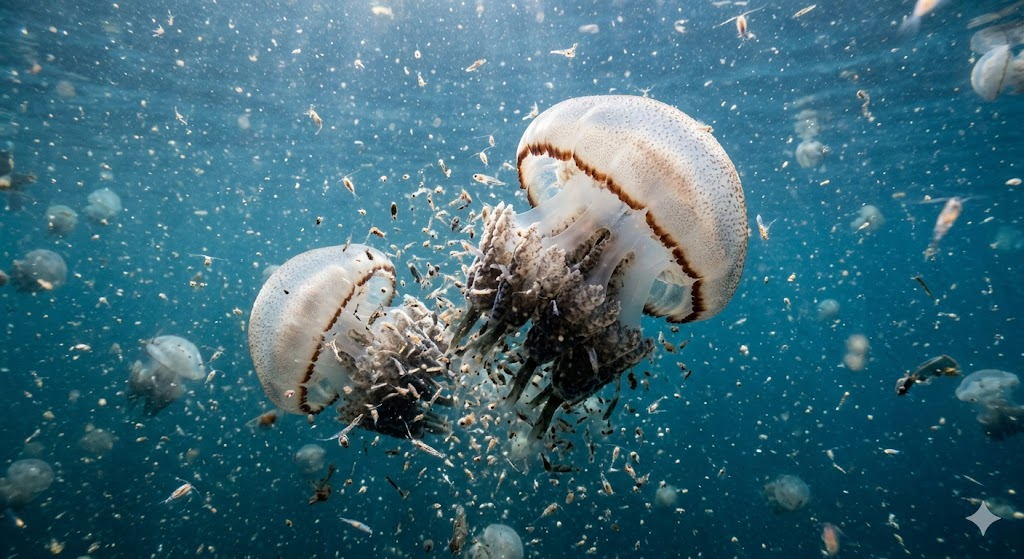
Even though they don’t have big teeth, the cannonball jellyfish is a great hunter. They mostly eat tiny drifting animals called zooplankton. They also love to eat the larvae (baby versions) of different fish and crabs. To eat, they use the short arms under their bell. These arms have tiny mouths that suck in food as the jellyfish swims through the water.
This eating habit is actually very important for the ocean. By eating small larvae, the cannonball jellyfish helps control the population of other sea life. However, sometimes they eat too many baby fish, which can be a problem for fishermen. It is all part of the big circle of life under the sea. They are like the vacuum cleaners of the ocean, tidying up the water as they go.
The Special Relationship with Leatherback Turtles
The cannonball jellyfish has a very famous fan: the Leatherback Sea Turtle. These giant turtles travel thousands of miles just to eat these jellyfish! For a Leatherback, a cannonball jellyfish is like a delicious, high-energy snack. Because these jellyfish are so thick and meaty, they provide a lot of nutrients that the turtles need to grow and stay strong.
In fact, without the cannonball jellyfish, the Leatherback turtle would have a very hard time finding enough food. This is a great example of how every creature matters. When you see a “cabbage head” in the water, remember that it might be the next meal for a majestic sea turtle. Protecting our oceans means protecting the jellyfish too, so the turtles always have plenty to eat.
Do People Eat Cannonball Jellyfish?
Believe it or not, the cannonball jellyfish is actually a popular food in some parts of the world! In countries like China and Japan, they are caught in large numbers. They are cleaned, dried with salt, and then turned into a crunchy snack or added to salads. Because they are firm and not slimy when prepared correctly, they have a unique texture that many people enjoy.
In the United States, there are even some fishing businesses that catch the cannonball jellyfish to ship them overseas. It is a big industry! Not only are they tasty to some, but they are also used in traditional medicine. Some people believe they are good for skin health and joints. It is amazing to think that a simple beach “blob” can be a valuable resource for people across the globe.
How Do They Reproduce?
The life of a cannonball jellyfish starts out very small. They have a complex life cycle that involves both swimming and staying still. Adults release eggs and sperm into the water to create tiny larvae. These larvae swim around until they find a hard surface, like a rock or a pier, to stick to. Once they stick, they grow into something called a “polp,” which looks like a tiny sea anemone.
After some time, the polyp begins to bud off tiny baby jellyfish. These babies grow very fast. Within just a few months, they become the round cannonball jellyfish we recognize. This fast growth is why you can see so many of them at once. They are experts at making more of themselves when the ocean conditions are perfect. It is one of nature’s coolest transformations!
Why Are They Important for the Environment?
The cannonball jellyfish plays a “double agent” role in the ocean. On one hand, they provide food for turtles and some types of fish. On the other hand, they provide a safe home for others. Small crabs and tiny fish often hide inside the bell of a cannonball jellyfish to stay safe from bigger predators. It is like a moving fortress for these little guys!
By providing shelter and being a food source, the cannonball jellyfish keeps the coastal ecosystem healthy. They also help move nutrients through different levels of the water. Even though they seem simple, the ocean would be very different without them. They are a key link in the food chain that connects tiny plankton to giant sea turtles and even humans.
How to Stay Safe Around Jellyfish
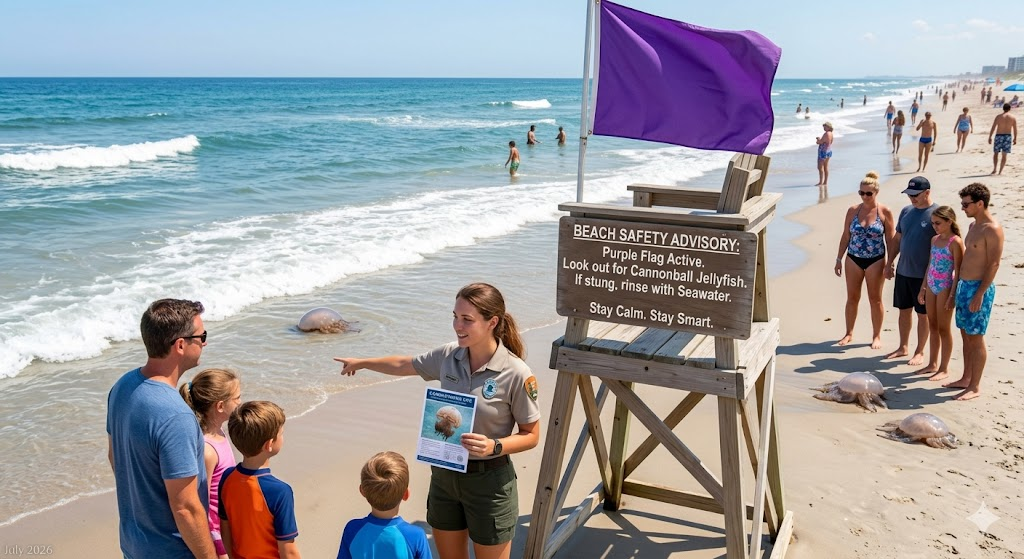
Even though the cannonball jellyfish isn’t scary, it is good to practice “jellyfish safety” whenever you are at the beach. First, always look for purple flags at the lifeguard stand. These flags mean there are stinging creatures in the water. Second, if you see a jellyfish, give it some space. You don’t need to poke or kick it to have fun at the beach.
If you ever do get a mild sting from a cannonball jellyfish or another type, don’t use old myths like vinegar or other liquids right away. The best thing is to rinse the area with plain seawater (not fresh water) and stay calm. Since the cannonball jellyfish has such a weak sting, any discomfort usually goes away in just a few minutes. Being a smart explorer makes every beach trip better!
Conclusion
The cannonball jellyfish is a wonderful example of how cool nature can be. They are tough, round, and helpful members of the ocean community. From feeding giant sea turtles to providing a crunchy snack for people, they do a lot more than just float around. Next time you visit the coast, keep an eye out for these “cabbage heads” in the surf.
Remember that we share the ocean with these amazing creatures. By keeping our beaches clean and respecting sea life, we make sure the cannonball jellyfish continues to thrive for years to come. Do you have a favorite jellyfish story? Or maybe you’ve seen one of these on your last trip? Pay attention next time you are near the water—you might just find a new appreciation for these round blue-water wonders!
Frequently Asked Questions
1. Can a cannonball jellyfish kill you?
No, a cannonball jellyfish cannot kill a human. Their sting is very mild and usually causes only minor irritation or no reaction at all.
2. Why do they wash up on the beach?
They often wash up because of strong winds, tides, or currents. Since they stay near the shore, a big wave can easily push them onto the sand.
3. What is the brownish ring on their body?
The brownish or purple ring is a natural pigment. It helps identify the cannonball jellyfish and distinguishes it from other species.
4. Do cannonball jellyfish have eyes?
They do not have eyes like ours, but they have special sensors that can detect light and help them stay upright in the water.
5. How long do they live?
Most cannonball jellyfish live for about three to six months in their adult form. Their entire life cycle is relatively short.
6. Are they the same as Moon Jellyfish?
No, they are different. Moon jellyfish are flatter, more transparent, and have four horseshoe-shaped marks in the center, while the cannonball jellyfish is round and solid.
